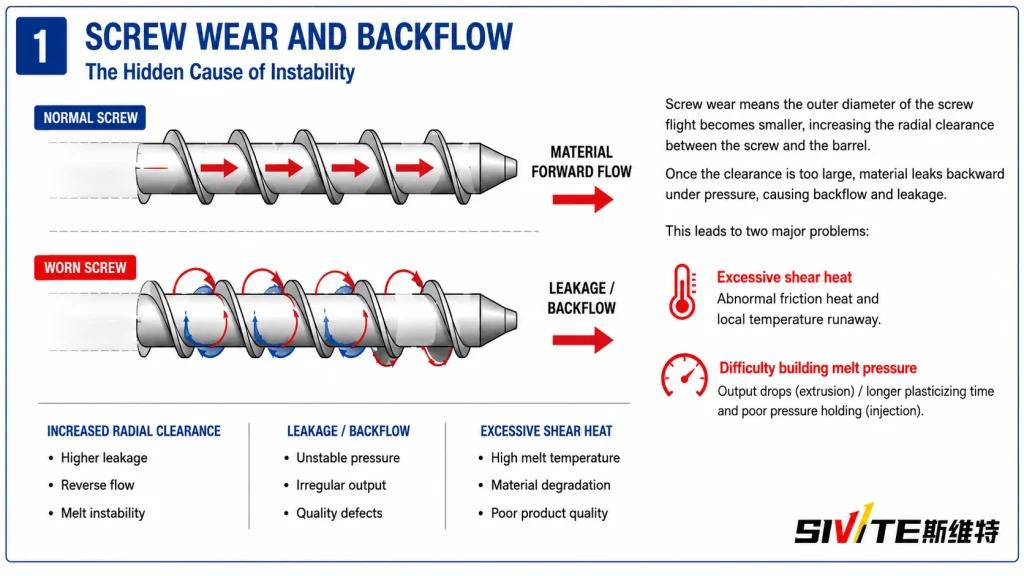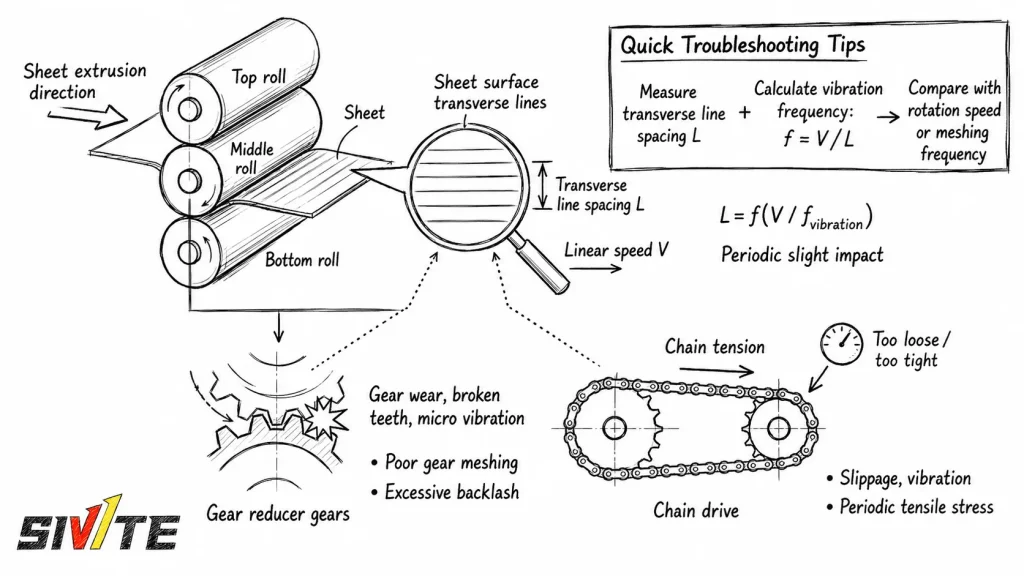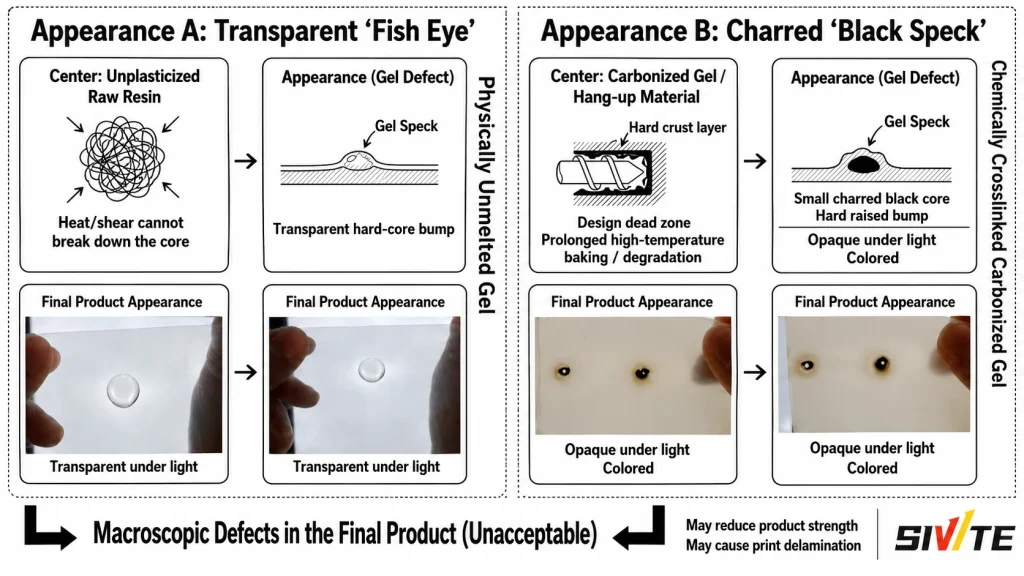
In plastic extrusion production, many manufacturers face common but frustrating problems:
- Extrusion output fluctuates during operation
- Product dimensions are inconsistent
- Surface defects such as bubbles, voids, and poor density appear
- Scrap rates increase unexpectedly
When these problems occur, operators usually check screw speed stability, heating temperature settings, motor load, and raw material quality. However, after checking these factors, the equipment may appear to be operating normally.
In many cases, the real cause is a small but critical component installed between the extruder barrel and the die: the Extruder Back Pressure Valve.
This article explains why Extrusion Flow Fluctuation occurs and how proper back pressure control improves Melt Pressure Stability, Melt Homogenization, and production consistency. For a broader view of the equipment involved, see SWT’s Plastic Sheet Extrusion Line.
1. Why Does Extrusion Flow Fluctuate?
During extrusion, the screw works like a high-pressure pump, continuously transporting molten polymer toward the die.
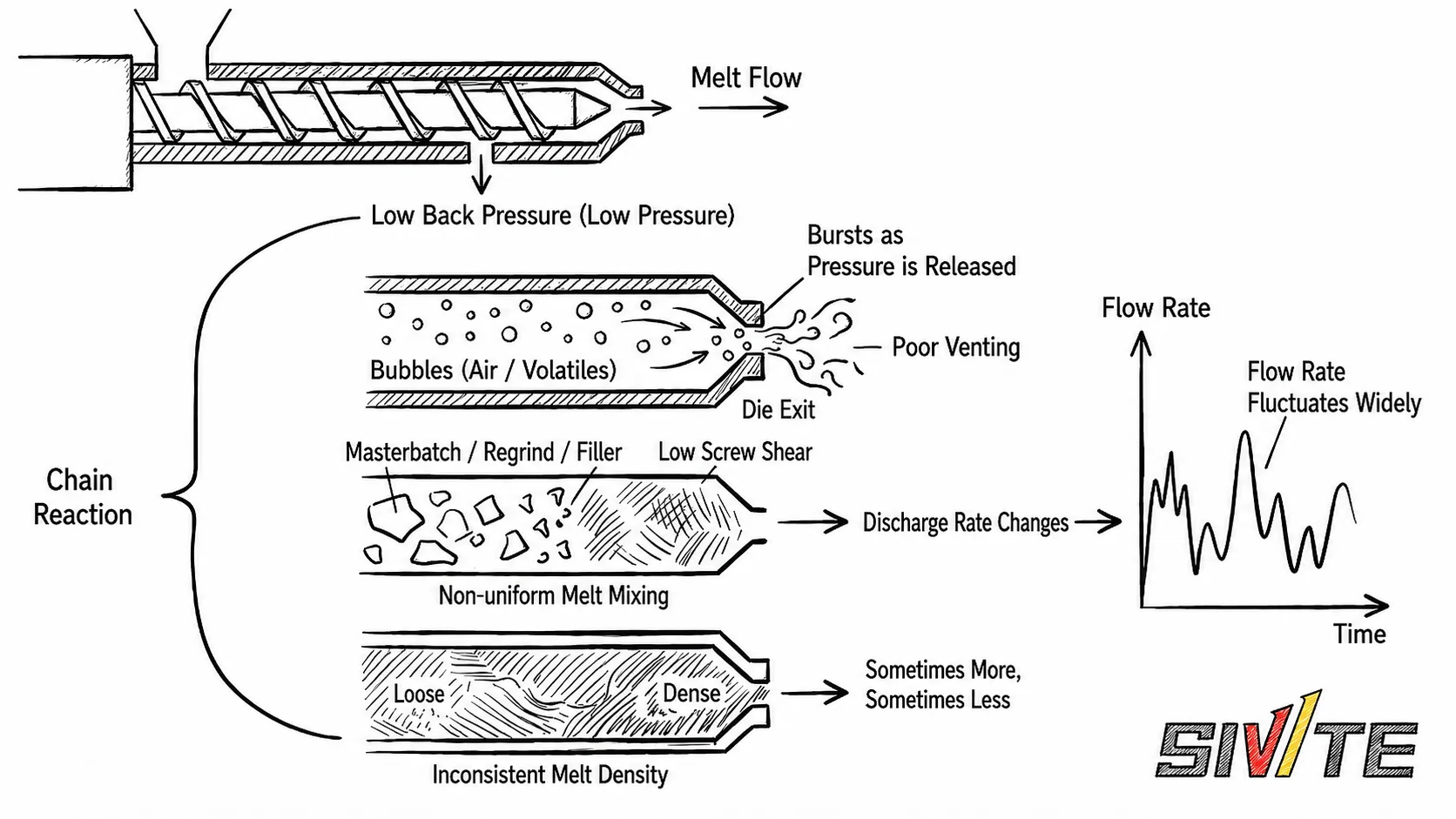
However, when the resistance inside the extrusion system is too low, especially when the back pressure is insufficient, several Plastic Extrusion Problems can occur.
Poor Degassing and Bubble Formation
When back pressure is too low, air trapped between plastic pellets and volatile gases generated during heating cannot be effectively removed.
These gases remain inside the polymer melt and create:
- Internal bubbles
- Voids
- Surface defects
When the melt reaches the die exit, sudden pressure release causes these bubbles to expand, resulting in unstable extrusion flow and poor product appearance.
For materials requiring high transparency and density, such as PET sheet extrusion, this problem can significantly affect product quality. A properly configured Vacuum Degassing System must work together with stable melt pressure.
Insufficient Melt Mixing and Homogenization
This problem is especially common when processing:
- Masterbatch
- Recycled materials
- Filled polymers
- Multi-component formulations
When back pressure is too low, the screw cannot generate enough shear force. The material is pushed forward without sufficient mixing.
As a result:
- Color dispersion becomes uneven
- Unmelted particles remain
- Melt viscosity fluctuates
- Extrusion output becomes unstable
A stable extrusion process requires not only melting, but also proper Melt Homogenization. The conveying, restriction, and mixing sections of the Extruder Screw Design must be matched to the material and output requirement.
Inconsistent Melt Density
Low back pressure can also cause uneven melt compaction. The polymer melt may contain loose and dense areas.
When this unstable melt enters the die, it causes:
- Flow rate fluctuation
- Thickness variation
- Uneven product density
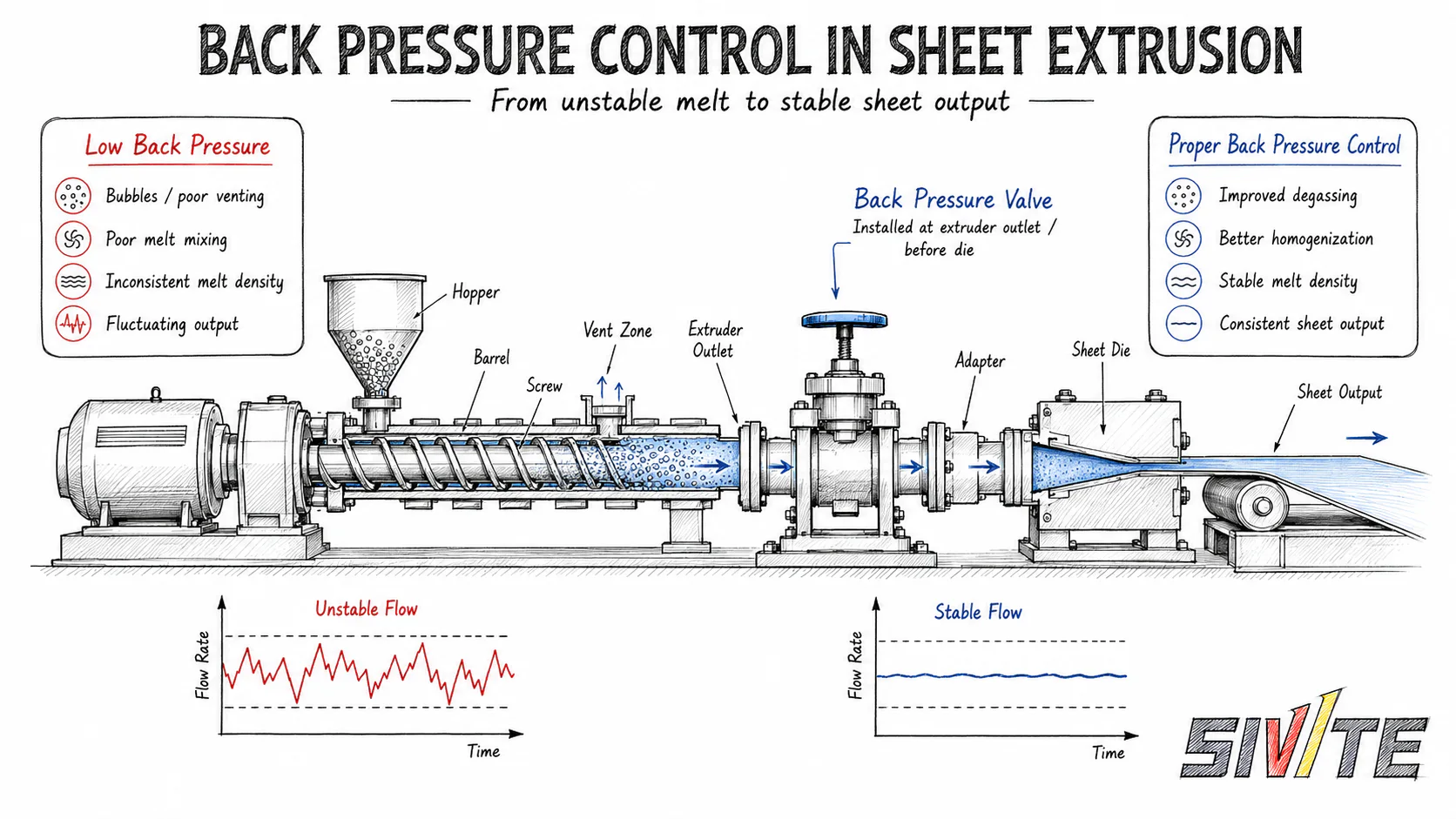
Stable and uniform melt pressure is essential for consistent extrusion quality. The complete low-pressure problem chain is shown below.
2. Back Pressure Valve: The Pressure Controller of an Extruder
Since insufficient pressure causes unstable melting conditions, the solution is to create controlled resistance and increase melt pressure.
This is the main function of a back pressure valve. It works like a pressure-control valve in a high-pressure system. Without pressure control, the system cannot maintain stable pressure. With a controlled valve, pressure can be maintained within the required range.
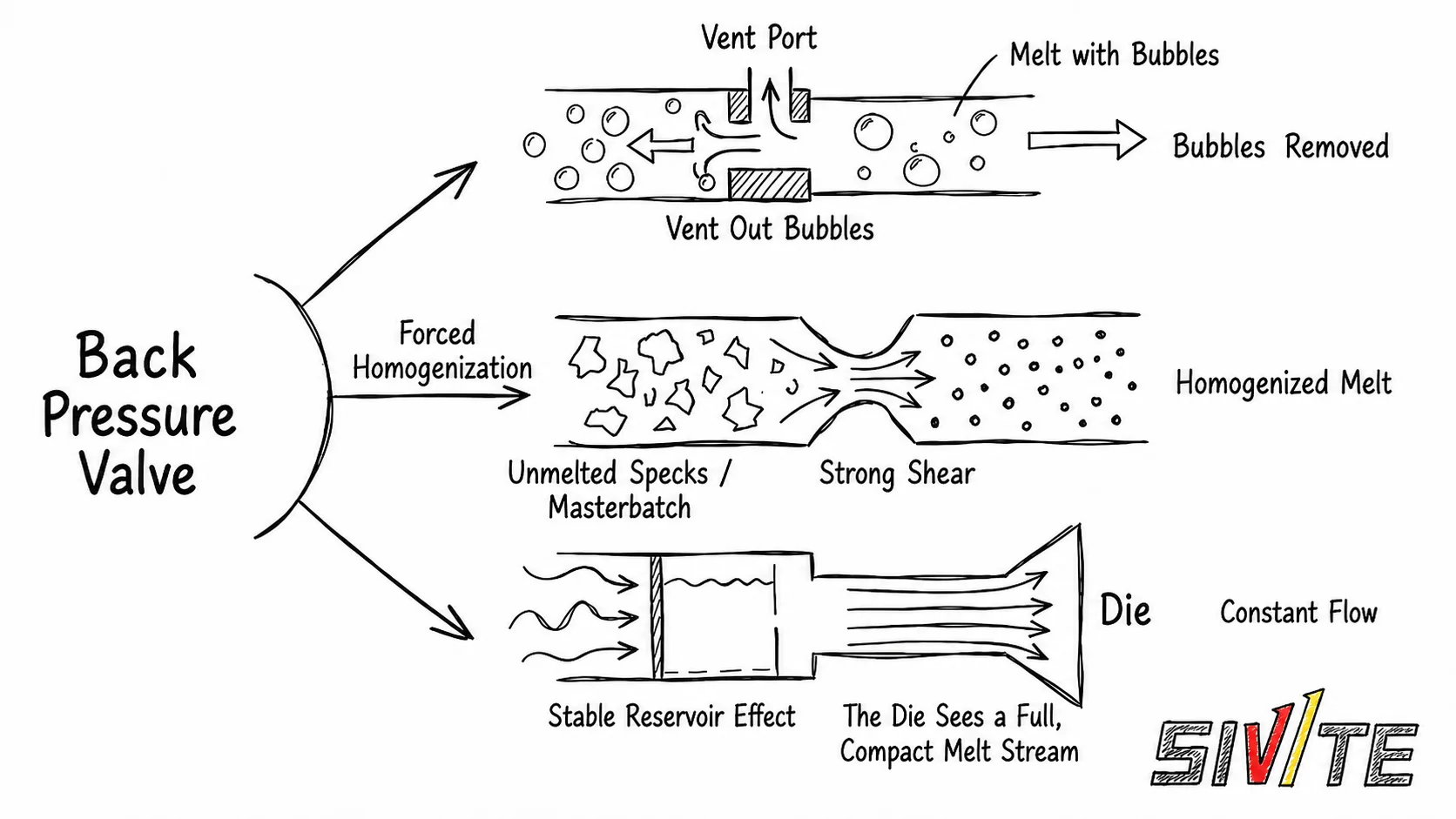
In an extrusion line, the back pressure valve is installed between the extruder barrel and the die. It improves venting, promotes forced homogenization, creates a stable melt-reservoir effect, and supplies the die with a more constant melt flow.
Improving Degassing Performance
When the back pressure valve increases melt resistance, pressure inside the extruder barrel rises. The higher pressure helps push trapped gases backward toward the venting section.
For vented extrusion systems, this improves:
- Air removal
- Moisture removal
- Volatile elimination
The result is a cleaner and more stable melt.
Improving Melt Mixing Performance
Higher back pressure increases resistance against screw rotation. This generates stronger shear force inside the screw channel.
The additional shear helps:
- Break down unmelted particles
- Disperse additives
- Improve color mixing
- Increase melt uniformity
A homogeneous melt improves product appearance, mechanical properties, and processing stability.
Creating a Stable Melt Reservoir Effect
The most important function of a back pressure valve is creating a stable high-pressure melt zone before the die. This area works as a buffer.
Even if feeding fluctuations occur upstream, the pressure zone reduces their influence. The die receives:
- Stable melt pressure
- Uniform melt density
- Consistent flow rate
This buffer effect is a practical form of Extrusion Process Optimization and can significantly improve product consistency.
3. How to Properly Adjust a Back Pressure Valve?
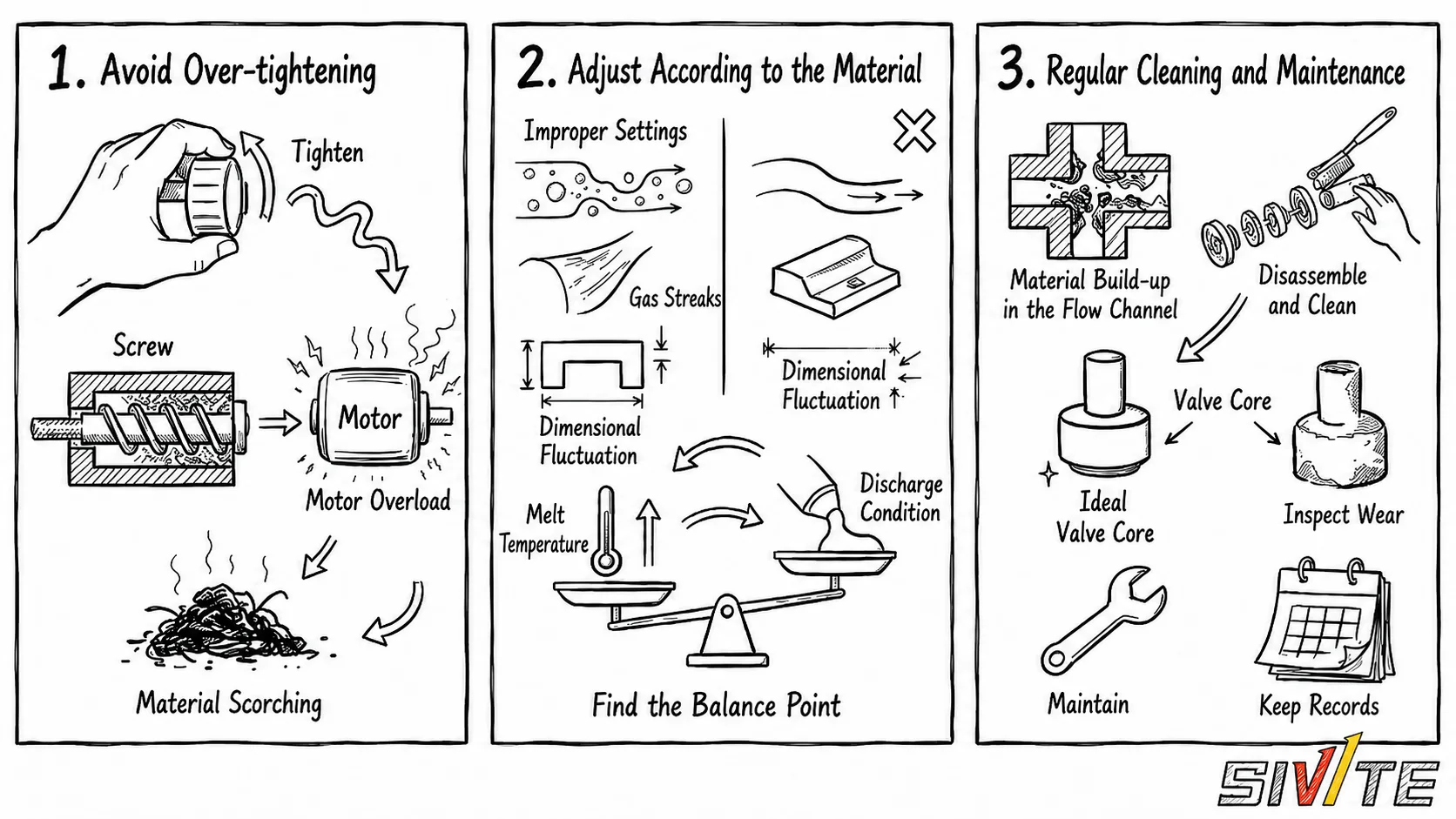
Although a back pressure valve is important, higher pressure does not always mean better performance. The goal is to find the balance between melt stability and processing safety.
Avoid Excessive Back Pressure
Too much back pressure can cause:
- Higher screw torque
- Motor overload
- Increased energy consumption
- Excessive shear heating
For temperature-sensitive materials such as PVC and other heat-sensitive polymers, excessive shear heat may cause material degradation, yellowing, and carbonization.
Adjust According to Material and Product Requirements
Different materials require different pressure settings.
If you observe gas marks on product surfaces, uneven color, thickness fluctuation, or unstable extrusion output, gradually increase back pressure and monitor:
- Motor load
- Melt temperature
- Product quality
The correct setting is where extrusion flow becomes stable, melt temperature remains controlled, and product quality improves.
Regular Cleaning and Maintenance
The internal flow channel of a back pressure valve is usually narrow. During long-term production, material buildup may occur, especially when processing calcium-carbonate-filled materials, talc-filled polymers, and recycled compounds.
Regular maintenance should include:
- Cleaning internal channels
- Checking valve-core wear
- Inspecting sealing conditions
Proper maintenance ensures accurate pressure control and long-term stability.
Conclusion: Stable Extrusion Starts with Proper Pressure Control
Plastic extrusion is a process where stability determines quality. When extrusion output fluctuates, the problem is not always caused by a major equipment failure. Sometimes, the real issue is simply that melt pressure has not been properly controlled.
A correctly adjusted back pressure valve can help achieve:
- Stable extrusion flow
- Better melt homogenization
- Reduced bubbles and voids
- Improved product density
- Higher production consistency
For manufacturers seeking higher-quality extrusion performance, optimizing back pressure control is an essential step.
Related Equipment
Sheet Extrusion Lines
For PET, PP and PS sheet production, review the extrusion configurations and engineering options relevant to this technical topic.
View Sheet Extrusion LinesDiscuss your application on WhatsApp